
What kinds of chicken products do you see in supermarkets? Home brand. Organic. Free-range. RSPCA Certified. But what you don’t see is that they all share a secret - they’re all from the exact same breeds of chicken.
Meet the Frankenchicken.
That’s a name used across the world for the fast-growing breeds used by almost every chicken corporation. These chickens grow so big and so fast that by five weeks old, many are struggling to walk.
The Frankenchicken is famous in the UK thanks to campaigns calling to ban them. But most Australians have never heard of them.
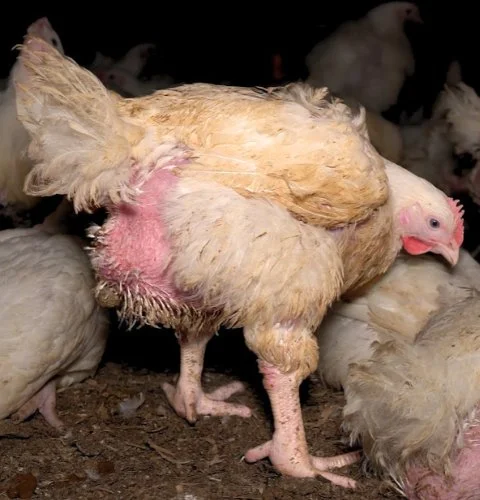
Image: A fast-growing Frankenchicken (Animal Liberation)
Bred for extreme growth
In the 1950s, a meat chicken took about 16 weeks to reach “market weight”. Today it takes around five - and they’re much bigger. Over the past fifty years, growth rates have risen by 400% and each bird now carries two-thirds more breast muscle weight. They’re overgrown and unbalanced, trapped in bodies that buckle under the pressure.
Why breed a chicken to grow like this? Simple - it meant more meat, faster and cheaper than ever before. Selection for fast growth worked, and chicken quickly became Australia’s most eaten meat. At the time, animal welfare science was an emerging field. Nobody asked what this breeding would do to the chickens’ welfare.
Today, just two breeds, the Ross 308 and the Cobb 500, make up virtually all of the meat chickens in Australia. And just two companies, Baiada and Inghams, produce more than half of them.
A body that can’t keep up
A Frankenchicken’s muscles grow faster than its bones can support. A New Zealand government survey of the Ross and Cobb breeds found that almost a third of birds had clearly impaired walking. Among the heaviest birds, it was more than half.
And it hurts. When chickens with walking difficulties are offered feed containing pain relief, the more severe their leg impairment, the more of the medicated feed they eat. On twenty Victorian farms, researchers found painful bone infections in 28% of the chickens that died or were culled.
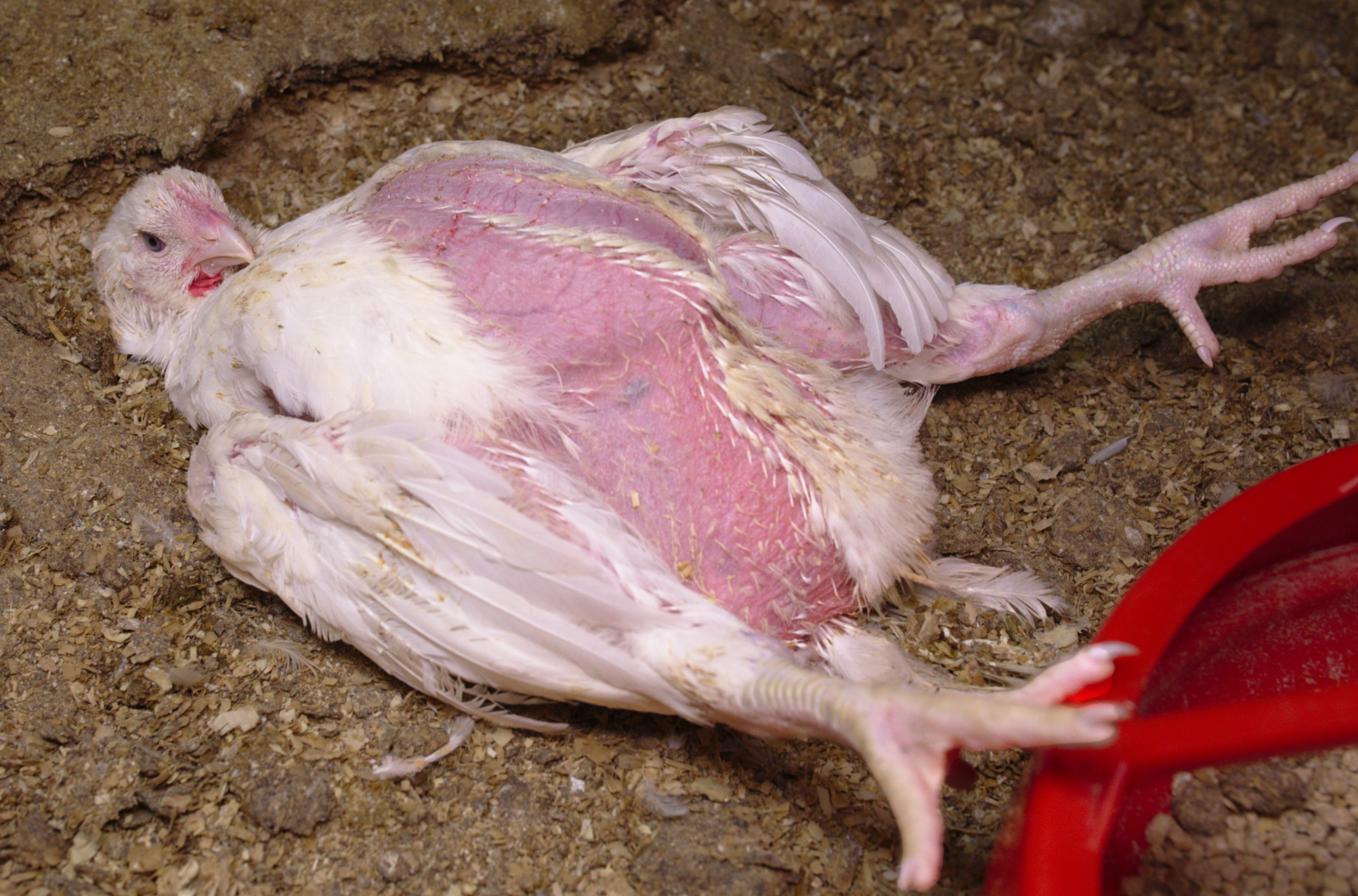
Image: A fast-growing chicken on a New Zealand farm (SAFE)
Their hearts struggle too. Fast-growing birds are prone to fluid build-up from heart strain, and to "sudden death syndrome", where young birds that look healthy flip over and die.
Because walking is hard and hurts, Frankenchickens spend a lot of their short lives sitting on dirty litter. The decomposing waste against their skin creates painful burns and sores on their feet, legs, and breasts.
The damage can be visible on your plate. “Woody breast”, a muscle disorder connected to fast growth, makes chicken meat tough and chewy. Estimates say it affects 5-10% of chicken meat.
Free-range, organic, RSPCA Certified - still Frankenchickens
This is the part the industry doesn’t want you to know. Paying more doesn’t get you a different chicken.
In Australia, there is no supply of slower-growing breeds to the major supermarkets or in mass-produced chicken products. That includes free-range and organic. The only slower-growing chickens you can buy are niche heritage breeds from a handful of specialist butchers or direct from local farmers. They are extremely expensive, out of the price range of most shoppers.
Free-range access gives a chicken the chance to go outdoors. It doesn’t give Frankenchickens legs that work properly to get there.
Over 97% of Australia's meat chickens are farmed under the RSPCA Certified scheme. They are all fast-growing breeds. RSPCA Australia’s new "enhanced welfare" add-on standard requires slower-growing birds, more space and more light. But no supermarket is yet selling chicken raised to this new standard.
This is a choice supermarkets can make. They can tell the chicken industry that they want to buy slower-growing, higher welfare chicken breeds - and the industry will meet that market demand.
RSPCA Australia can also set a date to stop certifying fast-growing chickens. RSPCA UK’s certification scheme only approves slower-growing breeds.
The fix: better breeds, better lives
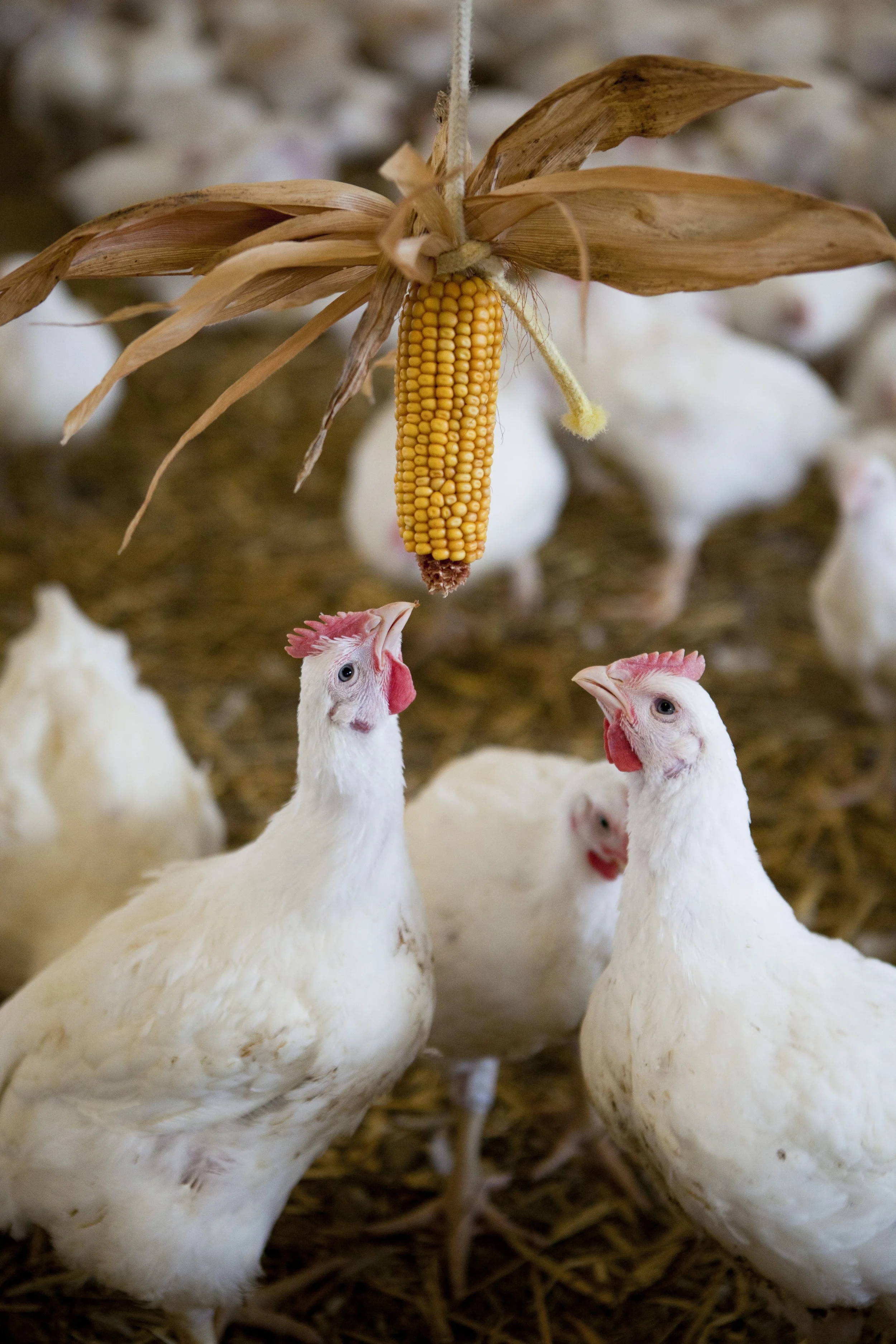
Image: Slower-growing chickens on a Better-Chicken Commitment compliant farm (RSPCA UK)
Slower-growing breeds still grow at a commercial rate, just not an extreme one. Their legs are stronger, their hearts are healthier, and they are much less likely to get injured or ill. They’re also more active, spending more time walking, running, and perching.
A healthier bird still needs room to live and use those stronger legs - that’s why the Better Chicken Commitment requires slower-growing breeds, but also:
More space
Natural light
Perches and things to peck at
More humane slaughter
Researchers estimate that put together, these changes cut the most severe pain the average meat chicken experiences by around 80%.
The world is moving - because people pushed
In the UK, major supermarket Waitrose meets the Better Chicken Commitment across every own-brand chicken product, right down to the chicken in its sandwiches and ready meals. All of Marks & Spencer's indoor fresh chicken meets it too.
In both the Netherlands and France, 20-30% of all meat chickens are slower-growing breeds. Every Dutch supermarket’s fresh chicken supply is 100% from slower-growing birds, while in France every major supermarket is committed to and making progress towards meeting the Better Chicken Commitment.
Norway is going all the way. Its industry has committed to replacing every fast-growing chicken with slower-growing breeds by the end of 2027, the first country to commit to a nationwide transition.
None of this happened by itself. Norway's progress is a result of six years of campaigning, and UK, French, and Dutch supermarkets moved after years of pressure from shoppers and animal welfare groups.
It’s Australia’s turn
Australia’s supermarkets decide how the chickens they sell are bred, raised, and slaughtered. They set the market demand that their supplies meet, and we know they pay attention when their customers speak up.
Tell Australia’s supermarkets it’s time to end the Frankenchicken.