
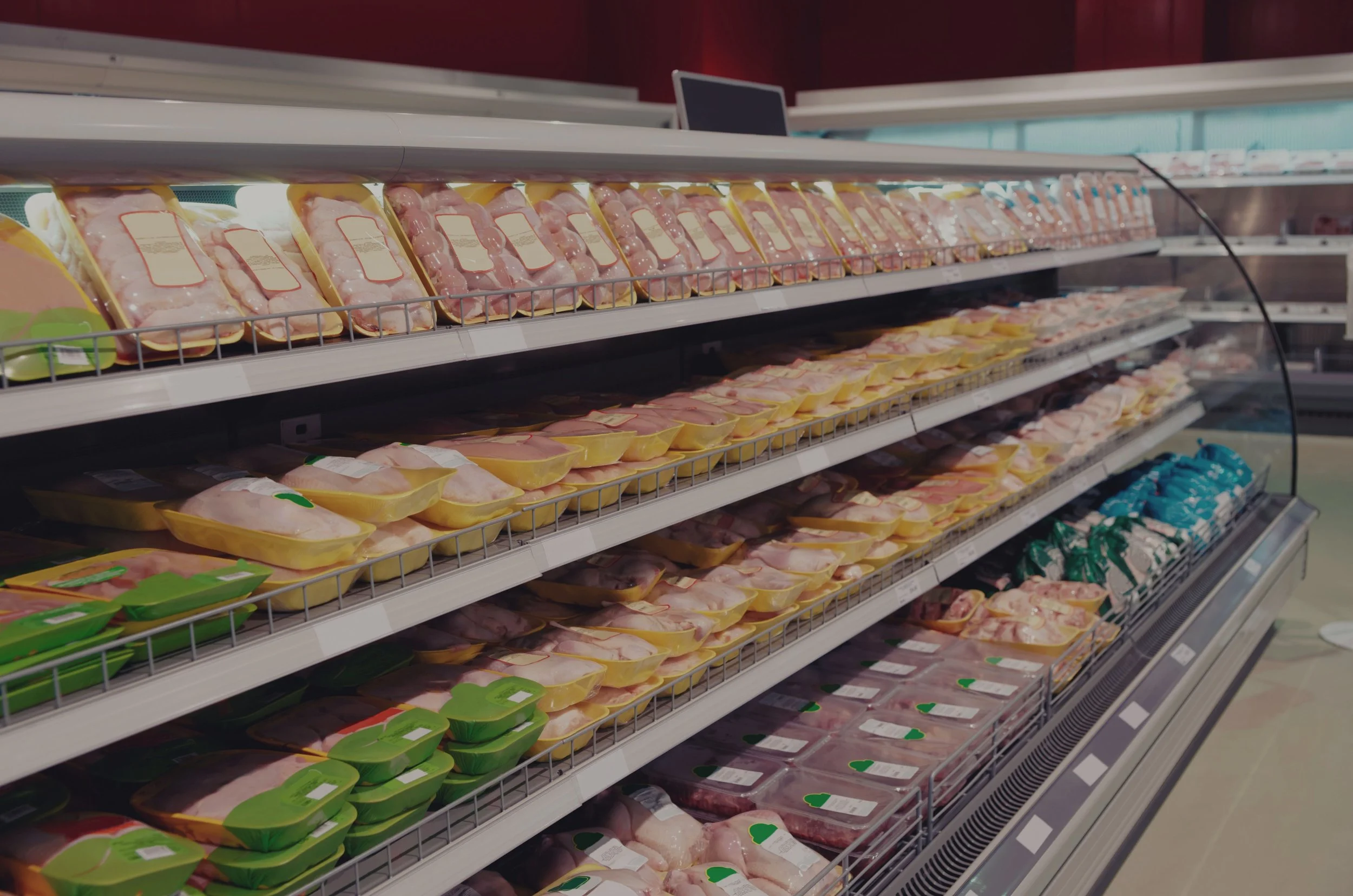
Your supermarket choices matter
How to choose higher welfare chicken in Australia
Chicken is the most consumed meat in Australia. The average Australian eats about 27 chickens every year.
At the same time, most Australians agree that our current animal welfare standards are not good enough.
Misleading labels and marketing can make it tricky to make choices that truly match your values.
You deserve honest, clear information.
Why chicken labels can be misleading
Chicken labels showing grassy fields and claiming birds are free to range and forage might sound reassuring.
But they often don’t mean what they seem to.
For example:
RSPCA Certified* standards don’t (yet) require higher-welfare breeds
“Free range” doesn’t mean all chickens are actually able to go outside
“No added hormones” is meaningless - hormones are not used in the Australian chicken industry
“Organic” has no legal definition, and doesn’t automatically mean it has better animal welfare
*RSPCA Approved has recently rebranded to RSPCA Certified - check out their website to learn more about these changes.

Chicken is the most consumed meat in Australia. The average Australian eats about 27 chickens every year.
Misleading labels and marketing can make it tricky to make choices that truly match your values.
You deserve honest, clear information.
Why chicken labels can be misleading
Chicken labels showing grassy fields and claiming birds are free to range and forage might sound reassuring.
But they often don’t mean what they seem to.
For example:
RSPCA Certified* standards don’t (yet) require higher-welfare breeds
“Free range” doesn’t mean all chickens are actually able to go outside
“No added hormones” is meaningless - hormones are not used in the Australian chicken industry
“Organic” has no legal definition, and doesn’t automatically mean it has better animal welfare
*RSPCA Approved has recently rebranded to RSPCA Certified - check out their website to learn more about these changes.

A simpler way to shop kinder
Get your free shopping guide
We’ve created a quick guide to help you:
Understand what labels really mean - and how to tell the difference between misleading marketing and genuine information
Compare animal welfare standards between products, so you can make the most informed choices
Tell supermarkets that you want higher welfare chicken on their shelves
No guilt. No jargon (only what we’ve translated for you).
Just practical help.
And if you don’t eat chicken, share this with someone who does!

Share with someone who cares about animals
Most people want to do the right thing — they just don’t know how.
Help them out!
Share this page by clicking on one of the buttons below.