
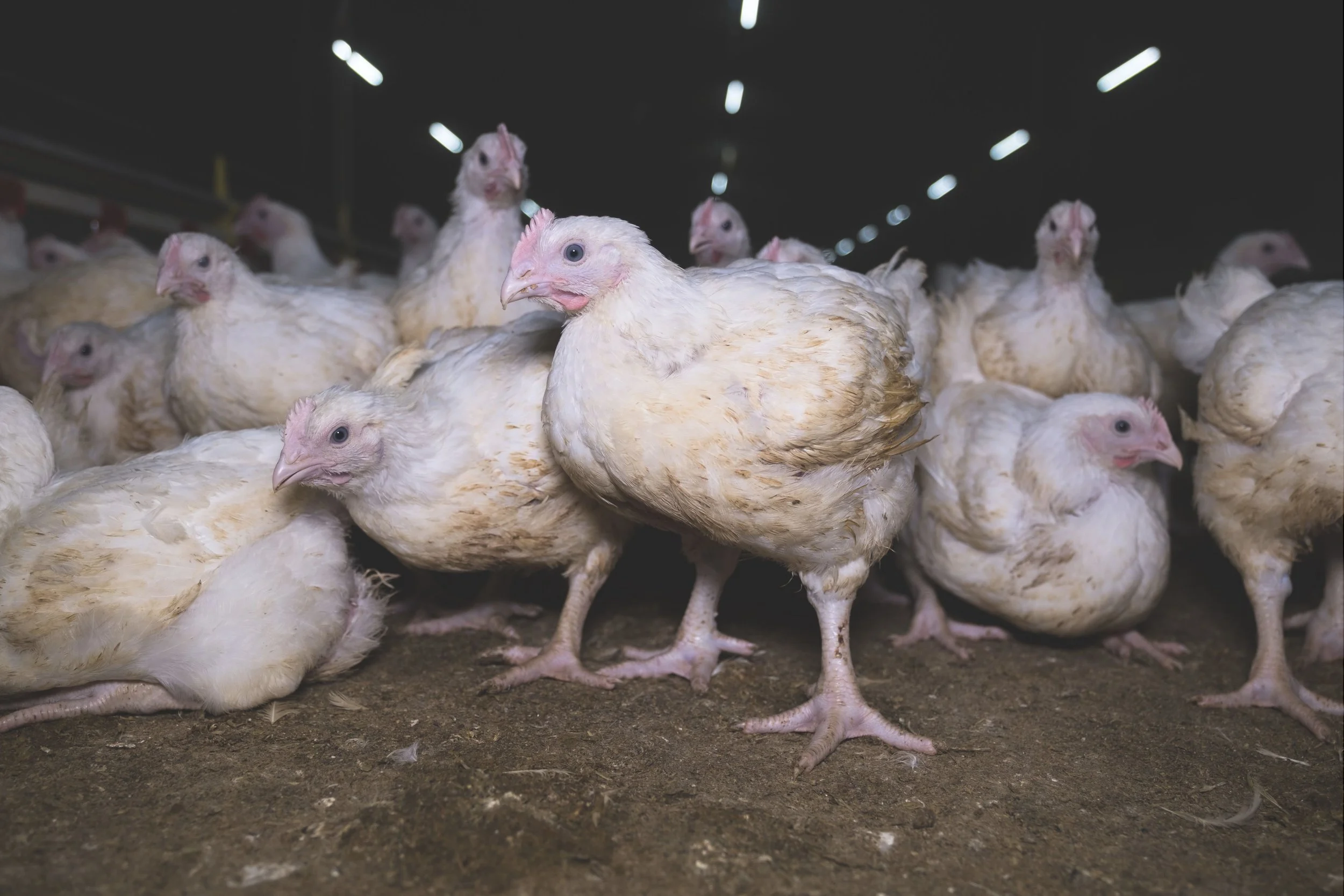
What’s wrong with chicken farming?
Image credit: Animals Uncovered
Australians naturally expect good animal welfare on our farms. But you’ll be shocked to find out how much chickens suffer under current standards.
Consumers deserve transparency over how chickens are raised for meat. The industry doesn’t want you to know - because their standard practices are cruel.
Faster growth
= more suffering
Meat chickens have been selectively bred to grow unnaturally large at an extremely fast rate.
They reach “slaughter weight” at just five weeks old - a pace their bodies struggle to cope with.
The chicken industry breeds for extreme growth to maximise production (and profit), but this comes at a huge cost to chicken welfare.
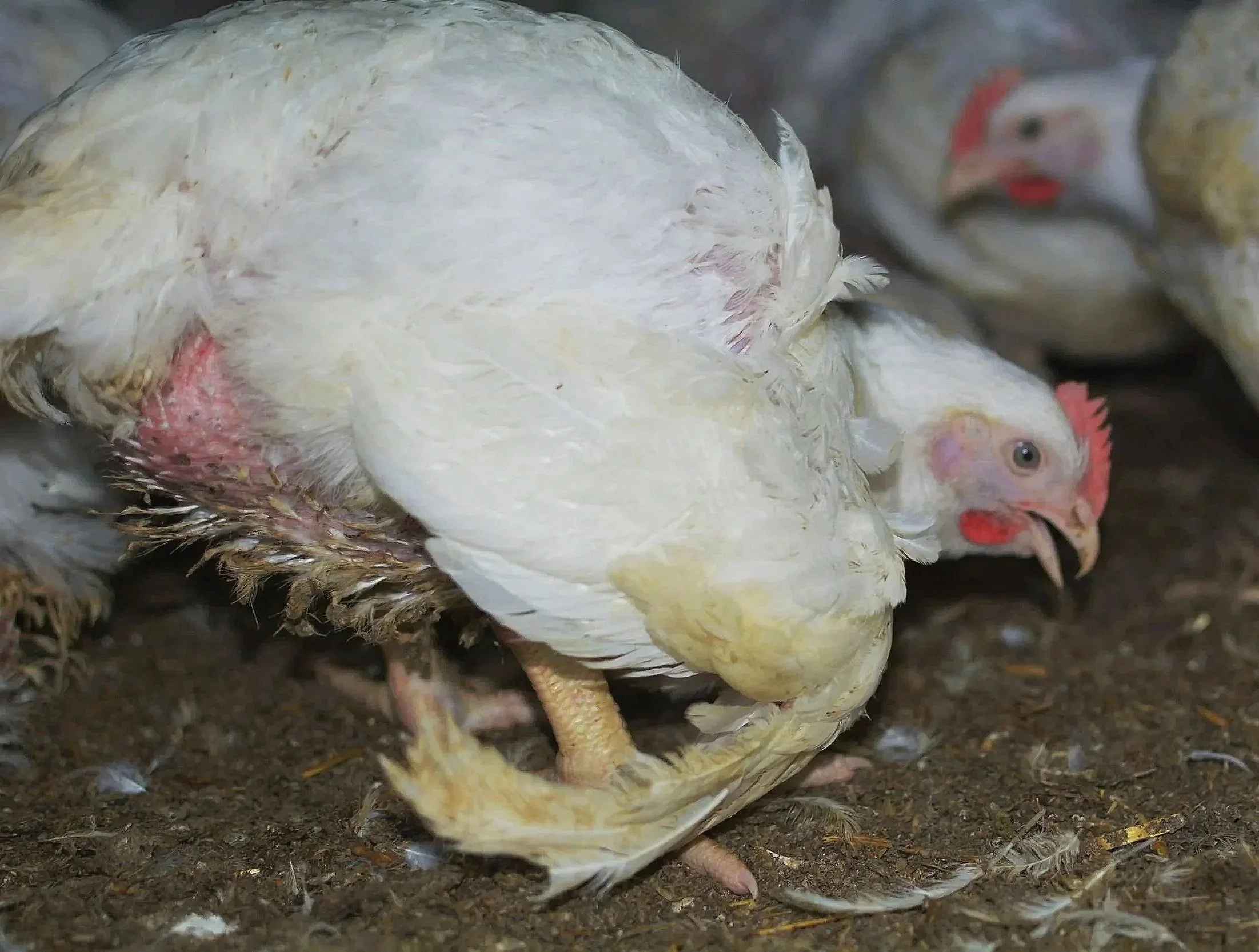
Image credit: Farm Transparency Project
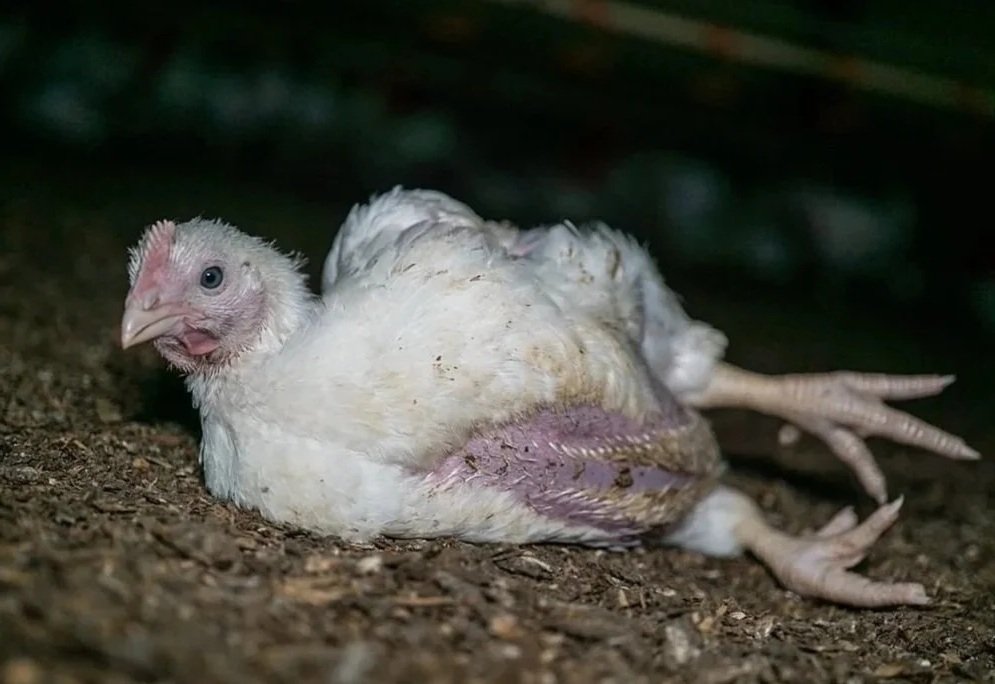
Image credit: Bear Witness Australia / We Animals
What happens to fast-growing chickens?
Their immature leg bones crack under their own body weight.
Their hearts and lungs are overworked to the point of failure.
Their feet and legs develop skin burns and infected wounds from sitting in damp, decaying waste, because it’s too difficult and painful to stand.
The solution is simple: switch to slower growing, higher welfare breeds. (Like Norway, where the industry is on track to phase out fast-growing chickens by 2027).
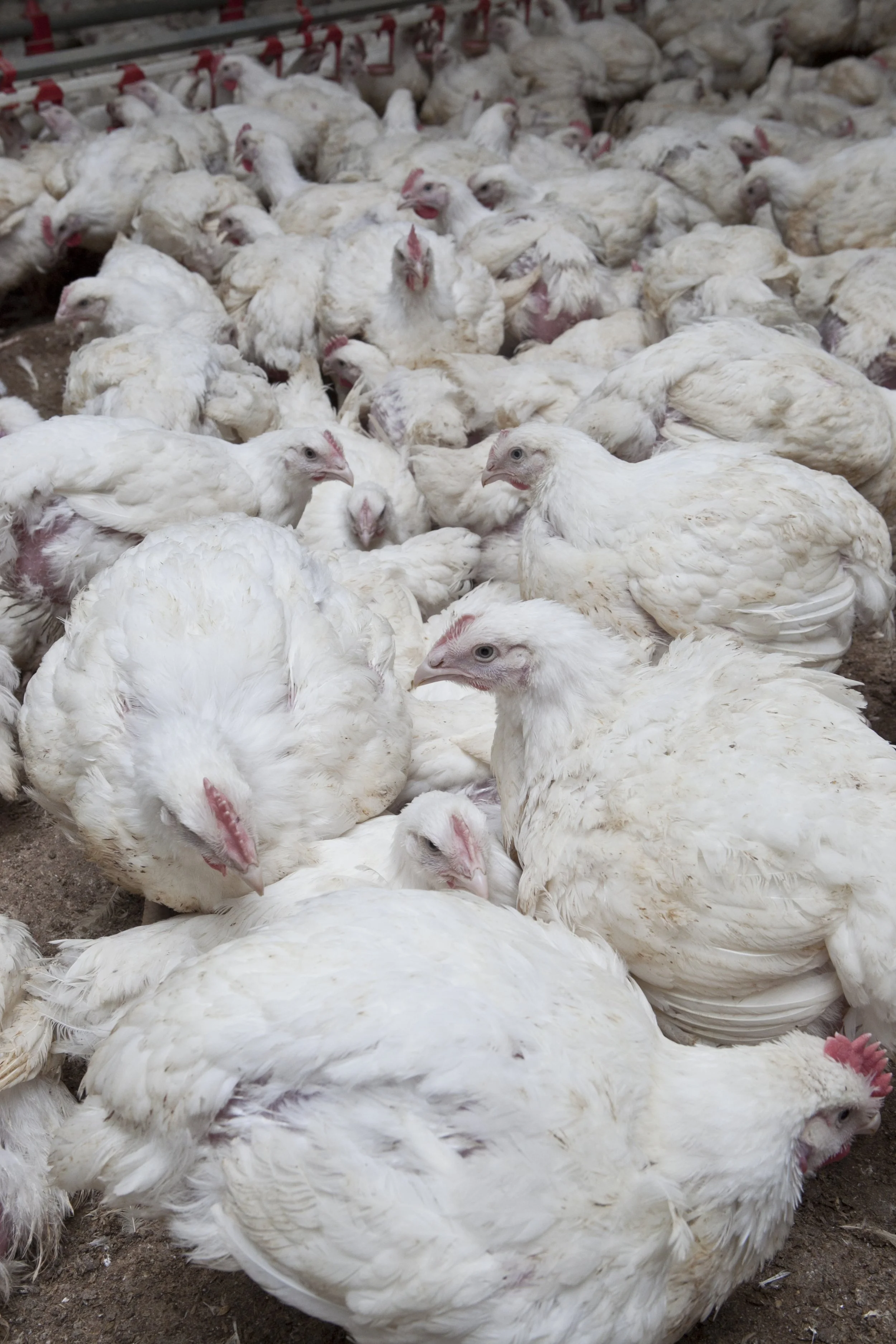
Image credit: Animal Liberation
Intensive chicken farming means tens of thousands of chickens packed together in sheds. Inside these sheds:
Space is limited
The air quality and light are poor
There is often zero sunlight
There’s not much for chickens to perch on, scratch in, or explore – it’s a barren and stressful environment
To thrive, chickens need space to scratch, forage and perch, sunlight, fresh air and an interesting environment.
Even free-range meat chickens don’t live the kinds of lives you might expect if they’re fast growing breeds. They’re still kept in sheds for three weeks, until their feathers have grown, and slaughter age is usually five weeks. And sadly, fast-growing chickens who struggle to move can’t benefit much from outdoor access.
That’s why switching to higher-welfare breeds is the most important change for animal welfare.
Cramped, uncomfortable sheds
Inhumane, outdated slaughter
Many Australian chicken slaughterhouses still use an outdated, unreliable and inhumane slaughter method.
Chickens are grabbed from their transport crates, hung upside down by their legs in shackles and then dipped into an electrified water bath for stunning. They then have their throats cut with an automatic knife. Chickens desperately flapping to try to escape can miss the electrified water bath, leaving them fully conscious when their throats are slit. It’s a terrifying and painful death.
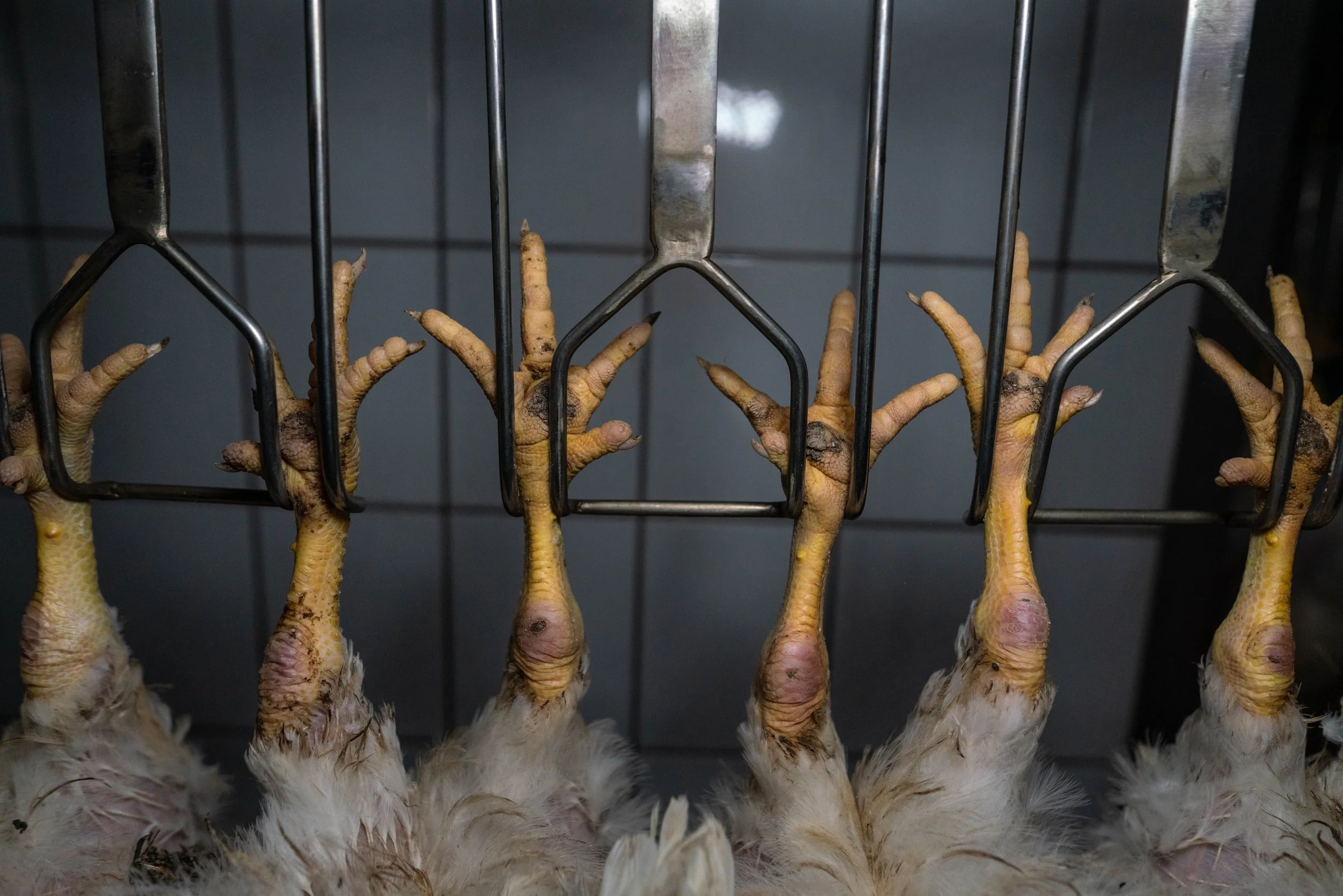
Image credit: Human Cruelties
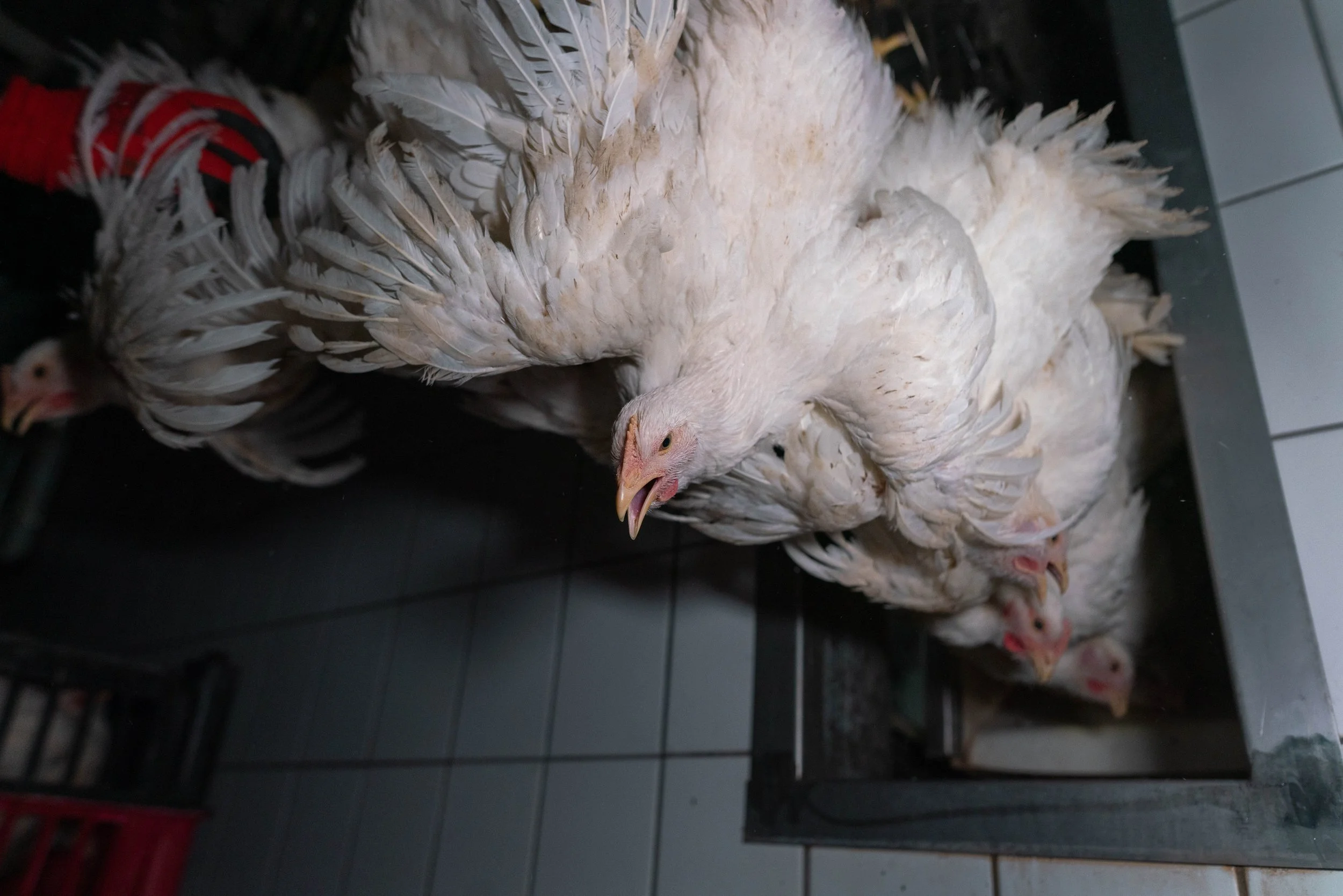
Image credit: Human Cruelties
What does modern slaughter look like?
An alternative slaughter method avoids live shackling and is much less stressful for the chickens. Controlled atmosphere stunning uses gas to send birds unconscious while they remain in their transport crates. The unconscious birds are then hung up for slaughter. This method is much more reliable and is already used for over half of Australia’s meat chickens.
Image credit: Bear Witness Australia / We Animals
Faster growth = more suffering
Meat chickens have been selectively bred to grow unnaturally large at an extremely fast rate.
They reach “slaughter weight” at just five weeks old - a pace their bodies struggle to cope with.
The chicken industry breeds for extreme growth to maximise production (and profit), but this comes at a huge cost to chicken welfare.
What happens to fast-growing chickens?
Their immature leg bones crack under their own body weight.
Their hearts and lungs are overworked to the point of failure.
Their feet and legs develop skin burns and infected wounds from sitting in damp, decaying waste, because it’s too difficult and painful to stand.
The solution is simple: switch to slower growing, higher welfare breeds. (Like Norway, where the industry is on track to phase out fast-growing chickens by 2027).
Image credit: Farm Transparency Project
Cramped, uncomfortable sheds
Intensive chicken farming means tens of thousands of chickens packed together in sheds. Inside these sheds:
Space is limited
The air quality and light are poor
There is often zero sunlight
There’s not much for chickens to perch on, scratch in, or explore – it’s a barren and stressful environment
To thrive, chickens need space to scratch, forage and perch, sunlight, fresh air and an interesting environment.
Even free-range meat chickens don’t live the kinds of lives you might expect if they’re fast growing breeds. They’re still kept in sheds for three weeks, until their feathers have grown, and slaughter age is usually five weeks. And sadly, fast-growing chickens who struggle to move can’t benefit much from outdoor access.
That’s why switching to higher-welfare breeds is the most important change for animal welfare.
Image credit: Animal Liberation
Inhumane, outdated slaughter
Many Australian chicken slaughterhouses still use an outdated, unreliable and inhumane slaughter method.
Chickens are grabbed from their transport crates, hung upside down by their legs in shackles and then dipped into an electrified water bath for stunning. They then have their throats cut with an automatic knife. Chickens desperately flapping to try to escape can miss the electrified water bath, leaving them fully conscious when their throats are slit. It’s a terrifying and painful death.
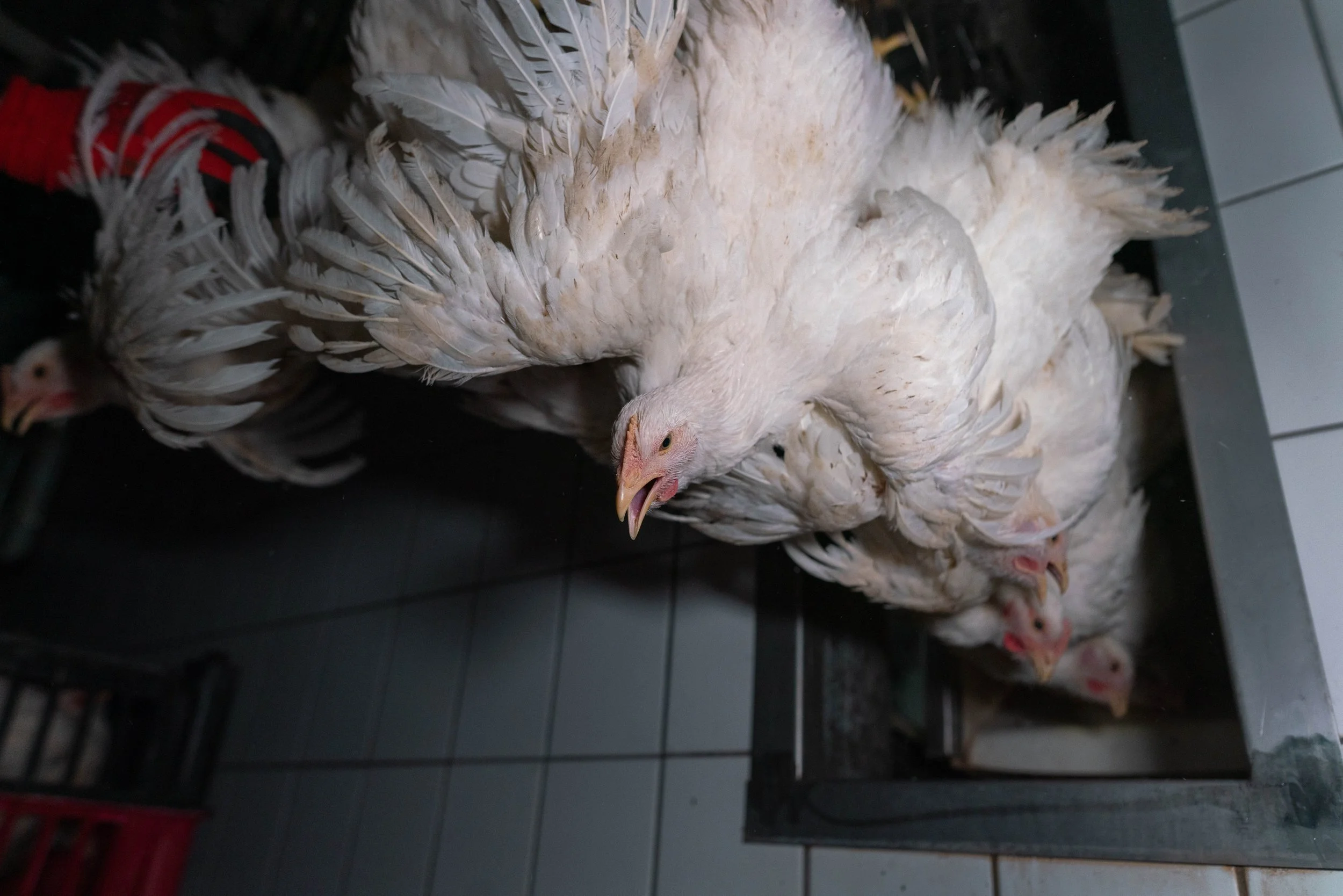
Image credit: Human Cruelties
What does modern slaughter look like?
An alternative slaughter method avoids live shackling and is much less stressful for the chickens. Controlled atmosphere stunning uses gas to send birds unconscious while they remain in their transport crates. The unconscious birds are then hung up for slaughter. This method is much more reliable and is already used for over half of Australia’s meat chickens.
Image credit: Human Cruelties
It’s time to switch to
higher standards
The Better Chicken Commitment sets out how to stop the extreme suffering of chickens raised by meat. It’s the global benchmark for chicken welfare, calling for a switch to:
Higher welfare, slower growing breeds
Comfortable, healthy living conditions, where each chicken has enough space, light and clean air
Slaughter methods that are more humane, with effective stunning and no live shackling
Around the world, more and more food businesses, chicken producers, and animal welfare certifiers are adopting the Better Chicken Commitment. It’s time for Australia to do the same.
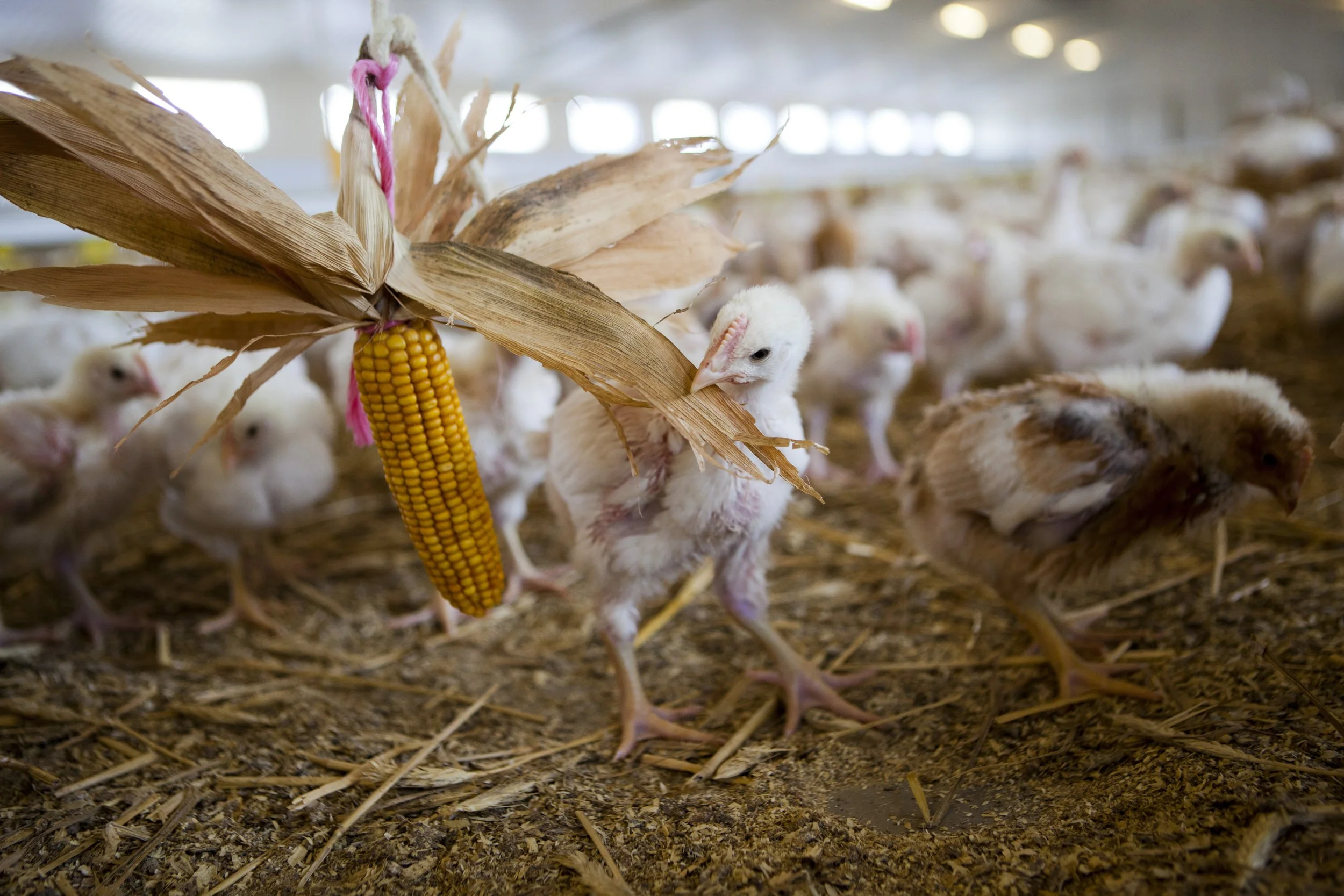
Image credit: RSPCA UK | RSPCA Assured
What can I do to help chickens?
Food businesses have the power to drive demand for higher animal welfare standards.
That’s why our focus is encouraging supermarkets, fast food restaurants, hospitality companies, and manufacturers to adopt the Better Chicken Commitment.
Your voice is powerful. Together, we can show food businesses that Australians want better animal welfare standards.
Visit our action hub to find out the latest ways you can speak up for chickens.
In the meantime, sign up to join thousands of other Australians supporting the Better Chicken Commitment.