
Who owns Australia’s chickens?
Modern farming is very corporatised. The “family farm” model is now rare. Big agribusiness controls most of the industry, backed by investment companies. This is especially true of chicken farming.
In Australia, chicken farming works differently to other kinds of animal agriculture. How does the chicken-meat industry work – and who holds the power?
What is the “chicken industry”?
The Australian chicken industry is dominated by a duopoly, like our supermarkets. Two companies own most of the chicken market – Baiada and Ingham’s. The rest of Australia’s chickens mostly come from mid-sized producers Turosi, Golden Cockerel, Hazeldene’s and Cordina.
These companies are usually called “producers” or “processors”, but those terms don’t explain much about how they work. Commercial chicken producers are vertically integrated. This means that they directly own or control most stages of the supply chain.
Let’s follow the journey a chicken goes through in the meat industry, from hatching to slaughter.
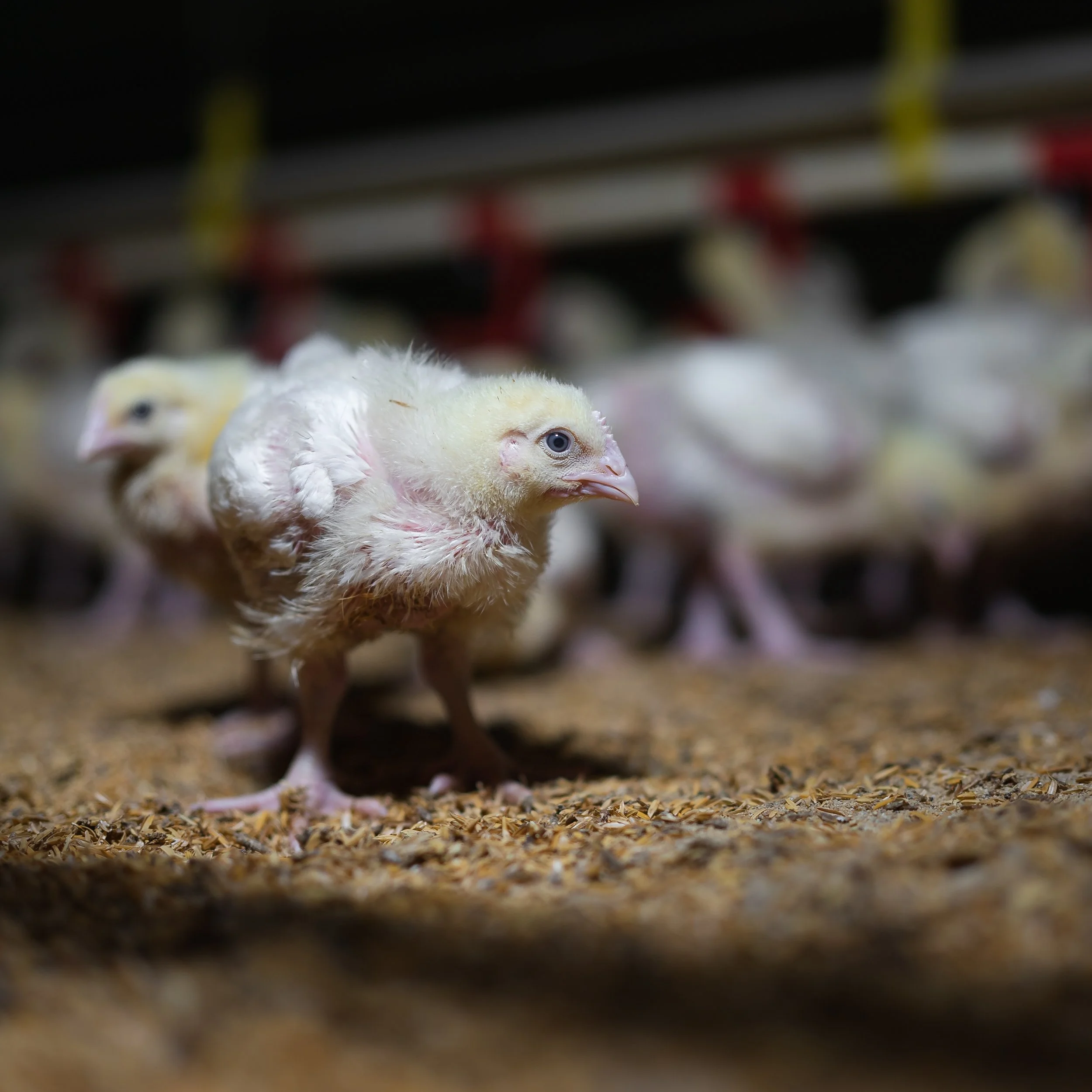
Chicks in a Baiada meat shed, in the outer Melbourne fringes.
Image: Dillon Watkin
1. Breeder farms
Producer owned
Where do the over 750 million chickens raised for meat every year in Australia come from? Producers own and run their own breeder farms, producing fertile eggs to grow into chickens.
All commercial meat chickens are the same fast-growing breeds, no matter if they’re raised on standard, free range, or organic chicken farms. In Australia, like most of the world, there are two breeds used – the Cobb 500 and the Ross 308.
These are both hybrid breeds. The male and female parent chickens come from different genetic lines that, when bred together, produce a fast-growing meat chicken.
2. Hatcheries
Producer-owned
The job of breeder farms is producing fertilised eggs – not hatching them. Producers collect the fertilised eggs from breeder farms move them to hatcheries. Here, they’re kept under controlled conditions for three weeks until they hatch.
Day-old chicks are then boxed up and transported to grower farms.
Why can’t regular meat chickens breed with each other?
Fast-growing meat chickens grow so big, so fast, that it’s very difficult to keep them alive long enough to reach breeding age.These birds are usually slaughtered at 5 weeks old. A female chicken won't start laying eggs until 18 weeks old at the very earliest. Keeping a fast-growing chicken alive for that long, let alone healthy enough to breed, is very difficult.
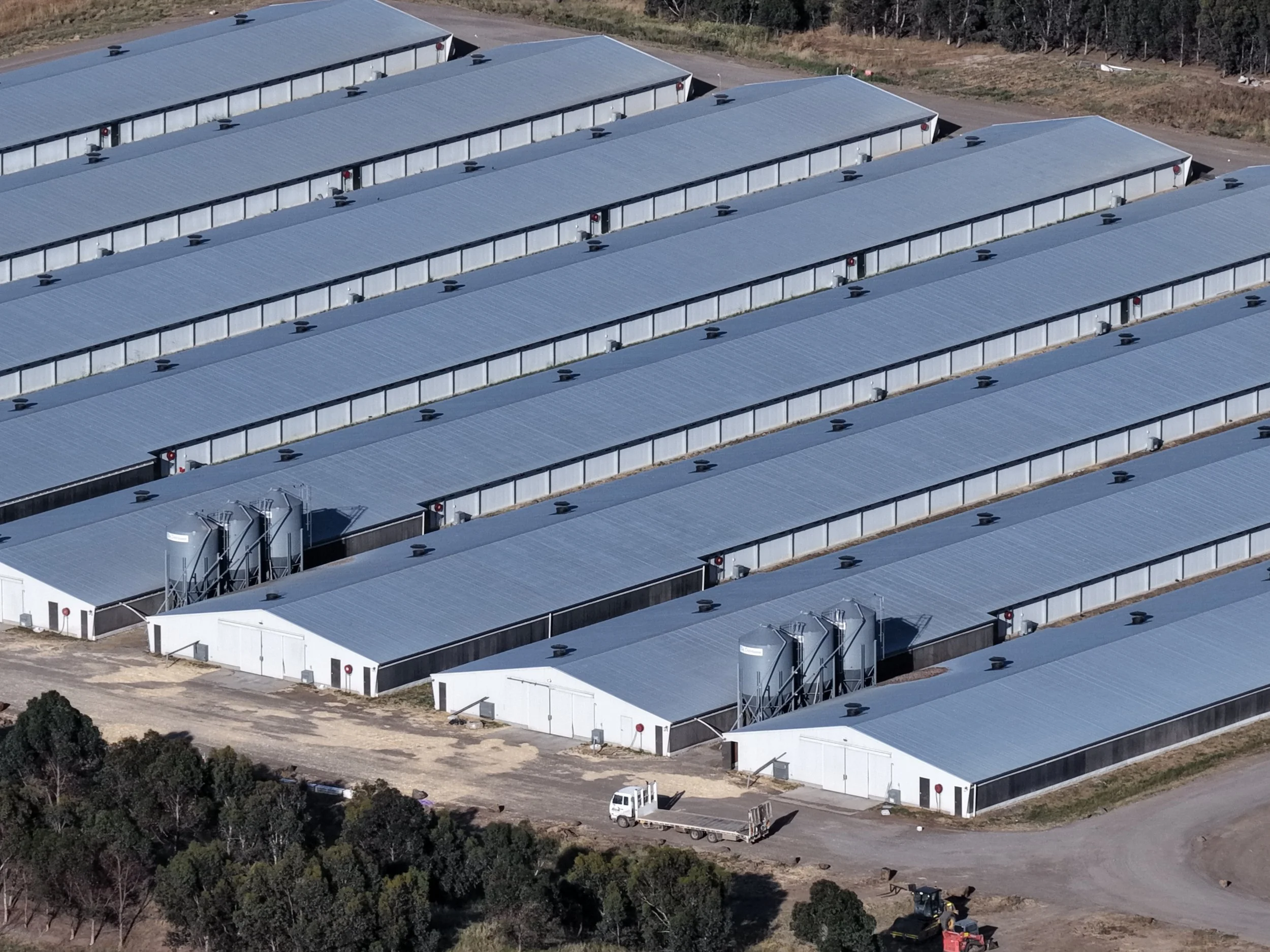
A meat chicken grower just outside of Geelong, housing up to 400,000 chickens. This farm is contracted to Turosi.
Image: Underground Wombat
3. Grower farms
Separate grower businesses, and some producer-owned
Grower farms are intensive, highly mechanised systems. This is where meat chickens spend most of their short lives. Grower farms are also the stage in the supply chain that isn't usually owned by the producers.
“Growers” are who you might traditionally think of as “farmers”. They do most of the work of raising chickens for meat. Growers own the property and are responsible for labour, equipment, and most supplies. Producers own the chickens and supply feed and technical support.
Producers contract growers to raise their meat chickens to set terms and conditions, and pay a growing fee per chicken. This means that producers decide how they want chickens raised, and pay growers to do so.
While producers are dominated by a duopoly, there are many more businesses in the grower sector. Around 700 independent growers and corporate businesses grow 80% of Australia’s meat chickens. None of these have more than 5% of the total market share. The remaining 20% is grown by one company, ProTen, which owns 60 farms across the country.
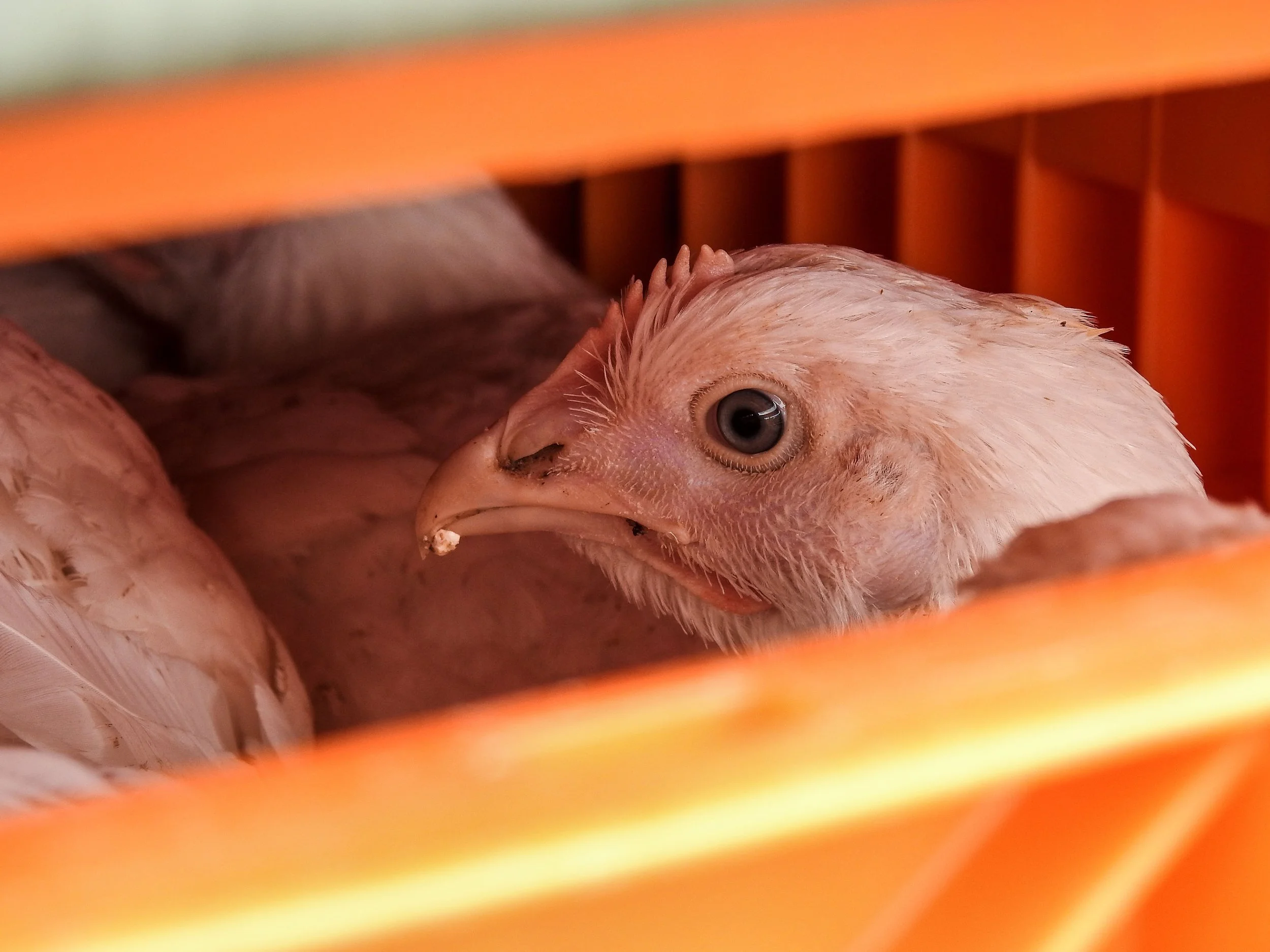
A meat chicken in a transport truck to slaughter at Ingham’s in Murrarie, Queensland.
Credit: animalrightsphotography
4. “Harvest” & transport
Producer-owned
The processor arranges contract workers to “harvest” chickens from sheds. They then transport the chickens in their trucks to their slaughterhouses.
Currently, chickens aren’t always “harvested” all at once. “Thinning”, also known as “partial depopulation”, is when some of the chickens in a shed are harvested for slaughter early.
5. Slaughterhouses
Producer-owned
There are two types of slaughter method used in commercial chicken slaughterhouses.
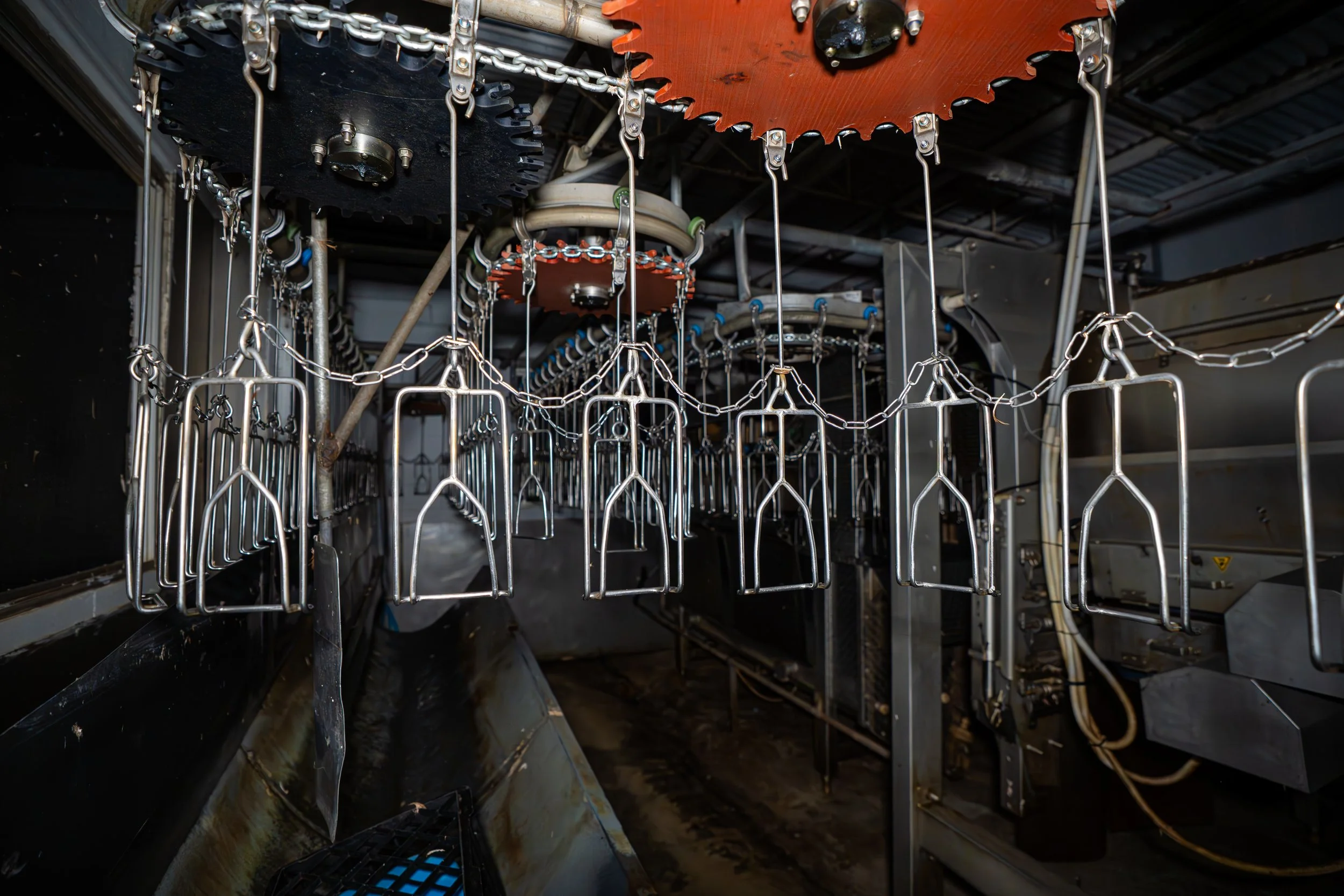
Empty shackle line at a chicken slaughterhouse in Sydney.
Credit: Farm Transparency Project
Live inversion with electrical waterbath stunning is a cruel and outdated slaughter method. The first step is live inversion, hanging chickens upside down by their legs in shackles. The second step is electrical waterbath stunning. The shackled chickens are dipped in electrified water to stun them.
Scared birds will flap around, meaning that many are still conscious when they’re slaughtered by a mechanical blade. Workers check for any chickens who are still alive and cut their throats by hand.
Controlled atmosphere stunning (CAS) uses gas to stun the chickens before slaughter. There are a few different CAS methods, but this is a more reliable and humane way to slaughter chickens. CAS does not involve manual handling and shackling live birds. Just over half of Australian chickens are currently slaughtered via CAS.
Producers & their brands
Chicken producers supply supermarkets and food businesses, and manufacture their own branded products.
For example, Baiada may not be a familiar name to most chicken shoppers – but Steggles and Lilydale are. Both are Baiada brands. Ingham’s keeps it simple with their branded chicken products sharing the same name.
Where does Coles and Woolworths brand chicken meat come from? The two major supermarkets are by far Australia’s biggest chicken buyers. Baiada and Ingham’s are key suppliers, but Coles and Woolworths source from many different producers around the country.
It’s time for better chicken standards
Right now, the Australian chicken industry is failing chickens and consumers.
Join thousands of Australians demanding better.
Already signed up? Check out our action hub to find out more ways to help chickens.